


Views: 0 Author: Site Editor Publish Time: 2026-05-28 Origin: Site


Station post insulators are structural components designed to support and insulate high-voltage busbars and conductors in substations, preventing electrical leakage to ground while maintaining mechanical stability under heavy loads.
Understanding the nuanced requirements of these insulators is vital for utility engineers and substation procurement professionals. As grids evolve to handle higher voltages and more complex loads, the selection and maintenance of these insulators have become even more critical for operational longevity and safety.
| Section | Summary |
| What Are Station Post Insulators? | Defining the fundamental purpose, material composition, and structural role of post insulators in high-voltage environments. |
| How Station Post Insulators Ensure Substation Safety and Efficiency | Analyzing how these components prevent arc flash, support physical loads, and minimize energy dissipation in grid systems. |
| Different Types of Station Post Insulators and Their Applications | Categorizing insulators by material and design, such as porcelain and composite, and matching them to specific voltage requirements. |
| Tailoring Station Post Insulators to Operational Conditions | Discussing environmental factors like pollution, seismic activity, and temperature that dictate the necessary specifications for an insulator. |
| Choosing the Right Insulator for Your Needs | Providing a decision-making framework for selecting the correct product based on BIL, mechanical strength, and environmental compatibility. |
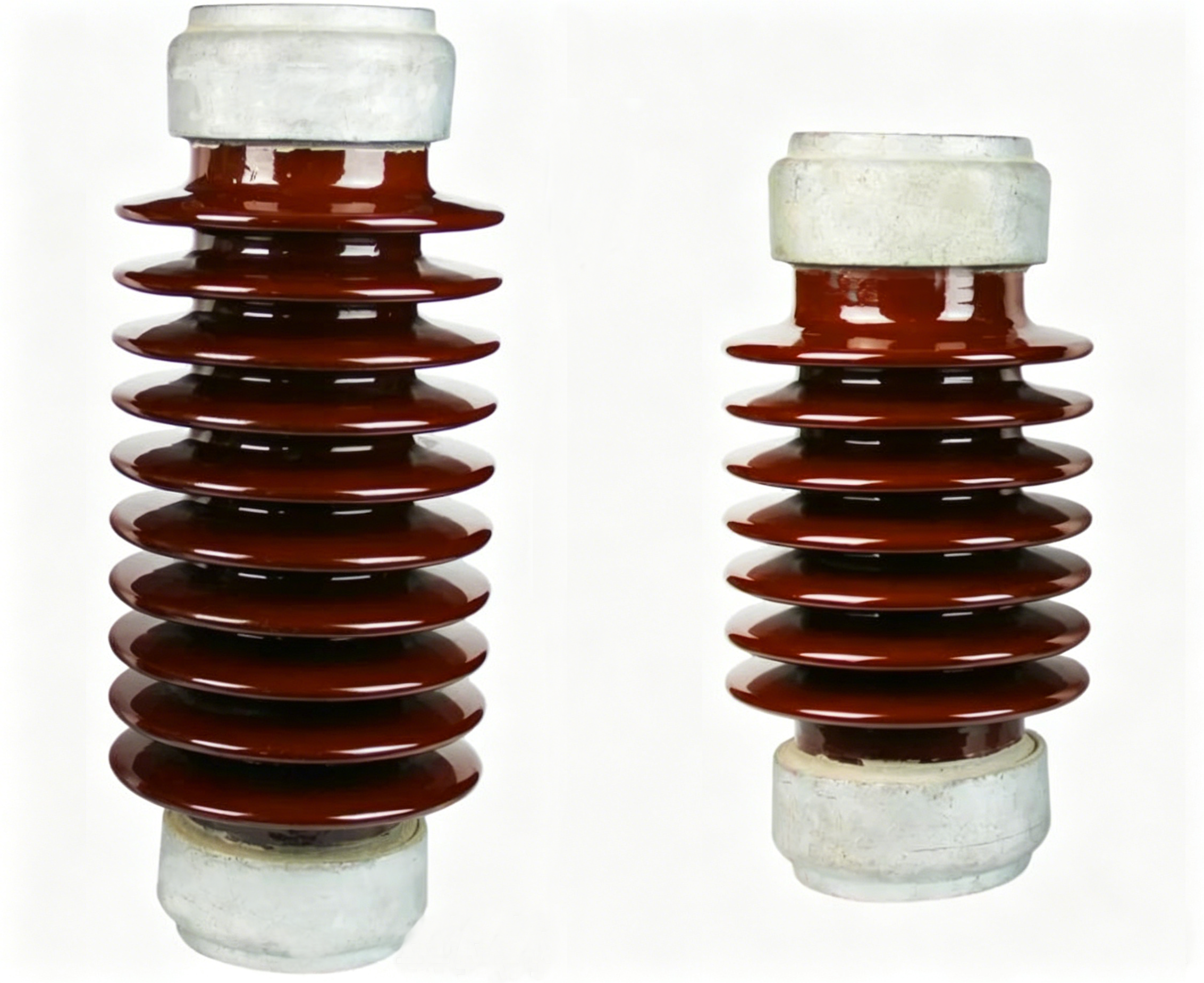
Station post insulators are rigid, high-strength dielectric supports that hold live electrical conductors in place while providing the necessary electrical isolation to prevent short circuits in substation environments.
At their core, station post insulators function as both a mechanical beam and an electrical barrier. They are specifically engineered to withstand the intense electromagnetic forces generated during short circuits and the heavy static weight of busbar systems. Because they are exposed to harsh outdoor conditions, these components are fabricated from materials that possess high dielectric strength, such as specialized porcelain or silicone rubber, which are resistant to weathering, ultraviolet radiation, and electrical tracking.
In a typical substation layout, the post insulator acts as the primary interface between the high-voltage bus and the support structure. The design often involves a solid core or a hollow core filled with insulating material to ensure long-term reliability. Unlike reliable pin insulators which are often used on distribution lines, station post insulators are designed to handle significant cantilever loads, making them the superior choice for supporting rigid busbars in substation yards.
These components are available in various lengths and diameters, with their physical form determined primarily by the system voltage level and the required creepage distance. Creepage distance is particularly important in areas with high humidity or high pollution, as it forces the electrical current to travel a longer, more difficult path along the surface of the insulator, significantly reducing the likelihood of a flashover.
Station post insulators guarantee grid safety by effectively isolating high-voltage equipment from ground structures and maintaining physical geometry, which prevents dangerous arcs and electrical outages.
The safety of a substation depends entirely on the integrity of its insulation system. If a station post insulator fails, it can result in a phase-to-ground fault, triggering circuit breakers and potentially causing extensive damage to expensive equipment like transformers and switches. By providing a consistent, high-impedance path to ground, these insulators keep the current contained within the conductors, protecting personnel and infrastructure from lethal voltages.
Efficiency is equally vital in high-voltage power transmission. Any current leakage—known as leakage current—represents a direct loss of energy. High-quality insulators minimize this leakage by providing a surface that resists the accumulation of contaminants. Furthermore, their mechanical rigidity ensures that busbars stay in their designed positions, maintaining clear air gaps between phases. If a busbar were to sag due to an inadequate support structure, the air gap could shrink below safe thresholds, increasing the risk of an arc flash.
The following table highlights the primary roles these insulators play in maintaining substation efficiency:
Arc Mitigation: Providing sufficient dry arc distance to prevent voltage from jumping to ground.
Contamination Management: Utilizing shed profiles to prevent the formation of a continuous conductive film during rain or fog.
Structural Support: Withdrawing intense mechanical stress from wind, ice, and electrodynamic forces during fault conditions.
Leakage Control: Offering high volume and surface resistivity to prevent energy waste.
Station post insulators are generally categorized into porcelain and composite types, each serving specific applications based on their mechanical characteristics, weight, and resistance to environmental degradation.
Porcelain insulators have been the industry standard for decades due to their excellent compressive strength and long service life. These are often used in areas where the equipment will remain stationary for 30 to 50 years. They are heavy and rigid, making them perfect for applications where massive mechanical loads need to be supported without deflection. However, porcelain can be brittle and susceptible to damage from impacts or severe seismic activity.
On the other hand, composite or polymer-based station post insulators have gained significant popularity due to their lightweight design and superior hydrophobicity. Because they repel water, they are far more resistant to tracking and erosion in polluted environments. For projects where maintenance access is difficult or where seismic resilience is a primary design concern, composite insulators are often the preferred choice. While they differ significantly from the structure of high-performance electrical hardware, they share the same requirement for high-quality manufacturing to ensure long-term dielectric performance.
When selecting between these types, engineers should consider:
Mechanical Strength (Cantilever load): Can the material withstand the expected wind and short-circuit forces?
Pollution Environment: Is the area subject to salt spray, industrial dust, or heavy moisture?
Seismic Requirements: Does the site require flexible materials to survive earthquake loads?
Weight Constraints: Are the existing steel structures capable of supporting the weight of porcelain, or is a lighter composite required?
To maximize the service life of substation infrastructure, insulators must be specifically selected based on the unique operational environment, including local pollution levels, climate, and mechanical load requirements.
A "one-size-fits-all" approach to selecting station post insulators is a recipe for premature failure. In coastal areas, for instance, salt spray can deposit a conductive film on the insulator surface. If the insulator does not have enough creepage distance, this salt layer can lead to surface arcing. In such cases, insulators with extra-extended creepage distances or specialized hydrophobic coatings are necessary.
Temperature cycling is another major factor. In regions with extreme seasonal variations, materials undergo constant expansion and contraction. Porcelain, if not perfectly glazed or if compromised by internal cracks, can trap moisture that freezes and expands, eventually shattering the unit. Composite insulators, while resistant to this, must be rated to ensure the internal fiberglass core maintains its structural integrity over thousands of temperature cycles.
Furthermore, mechanical load calculations must include more than just the weight of the conductor. Engineers must account for:
Short-Circuit Forces: The massive magnetic repulsion between phases during a fault.
Wind Loading: The lateral force applied to the insulator by high-velocity wind hitting the conductors.
Ice Loading: The increased weight of ice buildup during winter months.
Seismic Acceleration: The forces generated during a ground-shaking event, which can lead to fatigue in brittle materials.
Selecting the correct station post insulator requires a thorough review of the system voltage, required Basic Insulation Level (BIL), and the mechanical duty cycle of the specific substation bay.
Choosing the right insulator is a matter of balancing performance requirements with budgetary constraints. The most critical metric to verify is the BIL, or Basic Insulation Level. This represents the insulator's ability to withstand voltage surges, such as those caused by lightning strikes or switching operations. Selecting an insulator with an inadequate BIL can lead to sudden, catastrophic failure during a storm or grid transient.
Beyond electrical ratings, the mechanical specifications are paramount. Every insulator has a rated cantilever strength. This value must be cross-referenced with the maximum expected forces in your specific design. Using an advanced substation insulator component that is undersized for the mechanical load will inevitably result in broken hardware and costly downtime.
When finalizing your procurement plan, ensure you check the following documentation:
Flashover Data: Confirm both dry and wet flashover voltage ratings.
Dimensional Drawings: Ensure the bolt patterns and mounting hardware are compatible with existing substation structures.
Testing Reports: Verify that the product has been tested to relevant international standards (such as IEC or ANSI) for mechanical and dielectric performance.
Lead Times and Availability: Given the critical nature of these parts, ensure the supplier can provide consistent quality for large-scale projects.
Station post insulators serve as the silent, unyielding foundation of the electrical grid. By understanding the material properties, the environmental requirements, and the mechanical loads that these components must manage, engineering teams can ensure the reliability and safety of their substations for decades to come. Whether opting for the time-tested durability of porcelain or the modern, lightweight advantages of composite technology, the goal remains the same: to isolate, support, and protect the high-voltage flow that powers our society. Investing in high-quality insulators is not just a procurement decision; it is a commitment to the long-term stability and resilience of the power grid.


